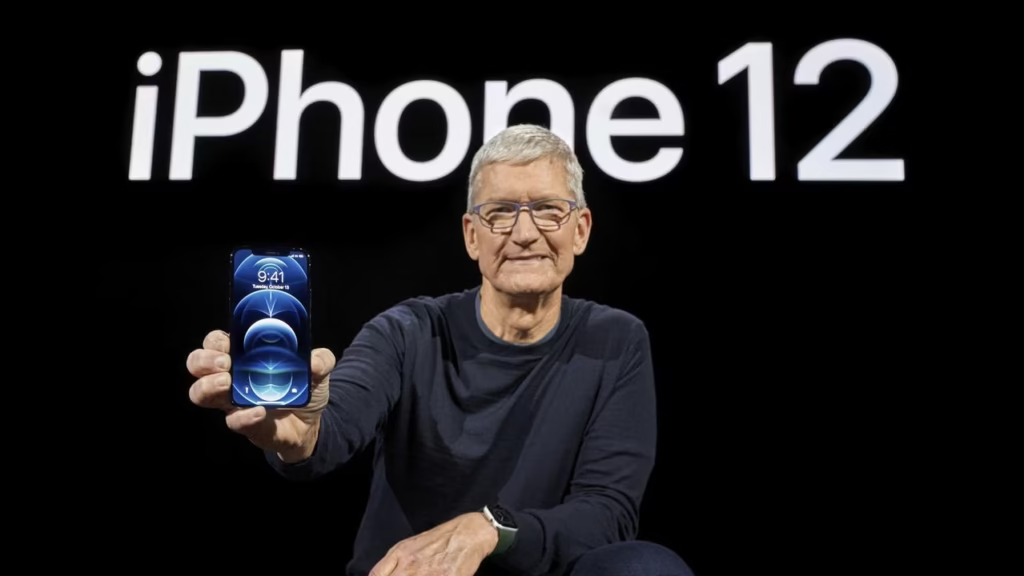
When Tim Cook became Apple’s CEO in August 2011, he had an extremely difficult job. He was taking over from Steve Jobs, one of the most famous innovators in the technology industry. Many wondered whether Cook could continue Apple’s success.
Fifteen years later, the answer is clear. Tim Cook made Apple one of the world’s most valuable companies by building on the iPhone business while creating a much broader Apple ecosystem.
Tim Cook Took Apple in His Own Direction
Steve Jobs was known for product innovation and dramatic launches. Tim Cook brought a different style of leadership. His biggest strengths were operations, supply chain management and careful decision-making.
Under Cook, the iPhone became much more than a smartphone. Apple connected it with services and accessories that became part of everyday life. Customers could use Apple products for payments, music, fitness, shopping and communication.
The results were remarkable. Apple’s stock increased by more than 2,000% during Cook’s time as CEO. The company also briefly reached a $5 trillion market value in July, becoming only the second company ever to reach that level.
Building a Stronger Apple Ecosystem
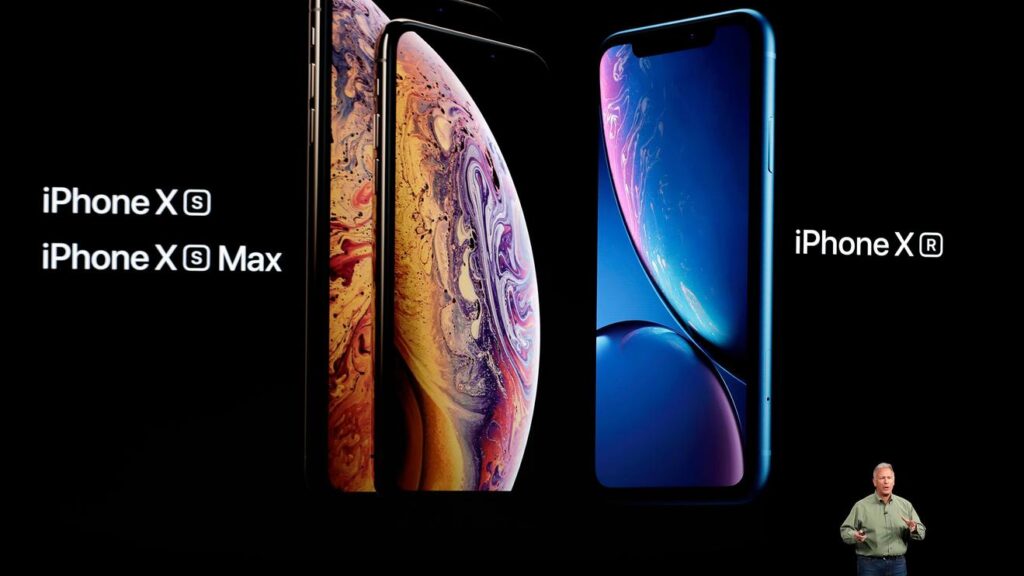
One of Cook’s most important achievements was expanding Apple beyond hardware. The company continued to sell iPhones, but its wider ecosystem became increasingly important.
Products such as the Apple Watch and services linked to the iPhone helped keep customers within Apple’s ecosystem. This made the iPhone more valuable because it worked as the center of many daily activities.
| Steve Jobs Era | Tim Cook Era |
|---|---|
| Strong focus on breakthrough products | Strong focus on scale and ecosystem |
| Product innovation was central | Services, accessories and operations grew |
| Famous for bold presentations | Known for calm and strategic leadership |
| Focused heavily on innovation | Focused on growth and global operations |
Managing US-China Relations
Tim Cook’s role was not limited to technology. Apple’s huge manufacturing network depends heavily on China, while the US remains one of its most important markets.
Cook had to manage difficult political and trade relationships between the two countries. He also pushed Apple to diversify some production outside China.
During pressure from the Trump administration to increase US manufacturing, Apple promised to invest $600 billion in expanding its American operations, including producing important iPhone components in the US.
This showed another side of Cook’s leadership: negotiation. His calm approach helped Apple deal with political pressure without damaging its global business.
Challenges for Apple’s Next Chapter
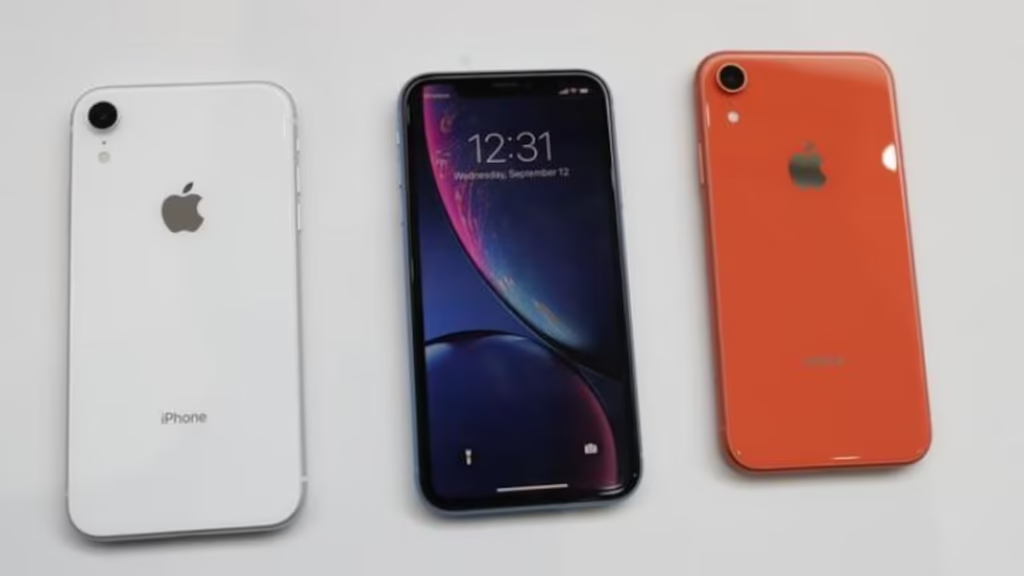
Cook leaves Apple after a period of extraordinary growth, but the company still faces major challenges. Dependence on China remains an issue, while European regulators have forced changes to Apple’s App Store policies.
Artificial intelligence is another major challenge. Apple faces pressure to keep pace with competitors in AI, while its Vision Pro has not delivered the impact many expected.
Cook’s advice for the future is simple: focus on products that enrich customers’ lives. That philosophy may become one of his most important legacies.
Tim Cook’s Apple story is ultimately about more than the iPhone. It is about turning a great product company into a massive global ecosystem while successfully navigating supply chains, politics and changing technology.