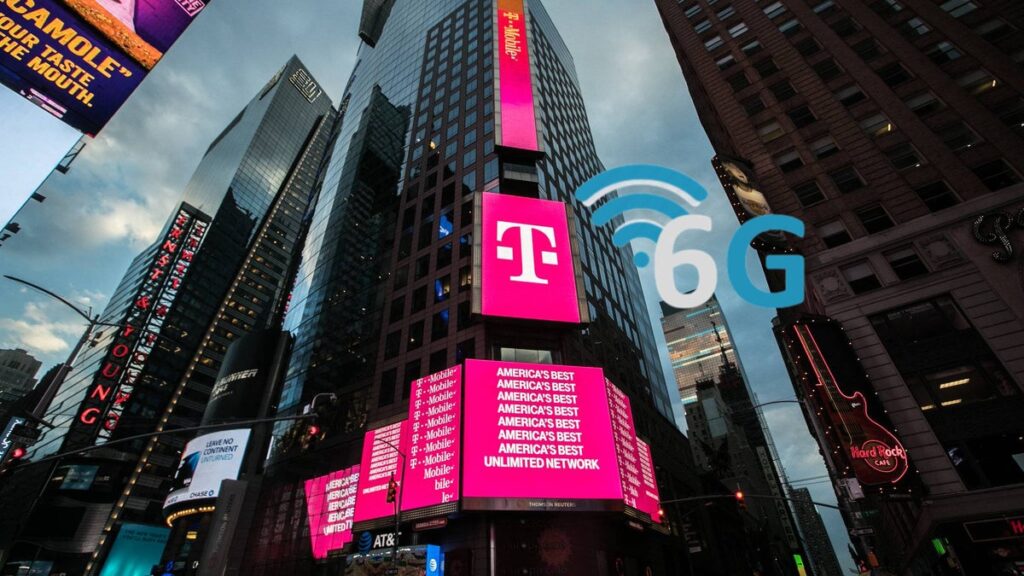
T-Mobile is already looking beyond 5G. The company wants to become the first mobile carrier in the United States to launch 6G, with 2030 emerging as its expected starting point. The announcement came during its third-quarter 2026 earnings call, where executives also discussed artificial intelligence, connected robots, and the company’s relationship with SpaceX.
The T-Mobile 6G launch plan is part of a bigger vision. The company believes future mobile networks will do more than connect smartphones. They will also support robots, drones, smart vehicles, and other AI-powered machines.
T-Mobile Plans to Lead the 6G Race
T-Mobile’s Chief Technology Officer, John Saw, said the company expects 6G networks to start being built around 2030. He also stated that T-Mobile aims to be the first carrier to introduce 6G in the US.
One interesting feature of 6G could be Integrated Sensing and Communications (ISAC). This technology may allow network stations and radio equipment to work like radar systems. It could help detect objects, support remote sensing, and create new services.
T-Mobile also expects mobile data usage to change by 2030. AI wearables, smart assistants, robots, delivery drones, and connected vehicles may send much more information to networks than today’s devices.
AI and Robots Could Shape T-Mobile’s Future
T-Mobile is working with several technology companies to explore physical AI. Its projects include humanoid robots from Figure AI, delivery robots from Serve Robotics, and connected cameras in San Jose.
The company is also working with Amazon Web Services (AWS) on a project called the “kinetic edge.” It aims to bring computing power and AI services closer to the machines that need them.
This could make connected devices respond faster and work more reliably. However, T-Mobile CEO Srini Gopalan admitted that physical AI is still in its early stages, and the business opportunities are not yet fully clear.
Why T-Mobile Says No to a SpaceX MVNO Deal
Despite its existing satellite partnership with SpaceX, T-Mobile has ruled out an MVNO agreement with the company.
An MVNO is a mobile service provider that uses another carrier’s network to offer services to customers. T-Mobile sees satellite connectivity as a complementary service rather than a replacement for its mobile network.
CEO Srini Gopalan made it clear that the company does not see room for a SpaceX MVNO deal for consumer services or physical and edge AI.
| Area | T-Mobile’s Position |
|---|---|
| 6G launch | Aims to lead the US market by 2030 |
| AI networks | Investing in physical and edge AI |
| SpaceX partnership | Satellite service remains complementary |
| MVNO deal | No planned agreement with SpaceX |
T-Mobile Reports Strong Q3 2026 Results
T-Mobile also reported positive financial results for the third quarter of 2026.
Service revenue increased 6% year over year to $19.4 billion. Postpaid service revenue grew 9% to $16.3 billion, while adjusted EBITDA increased 11% to $9.6 billion.
The company added 274,000 net postpaid accounts during the quarter, bringing its total to around 35 million. Average revenue per account reached $155.73, an increase of 4%.
Final Thoughts
T-Mobile is preparing for a future where mobile networks connect much more than phones. Its T-Mobile 6G launch ambition, AI projects, and edge computing plans show how the company wants to stay ahead in the telecom industry.
However, 2030 is still a target timeframe, not a confirmed launch date. The real test will be turning these ambitious plans into reliable services that customers and businesses can actually use.