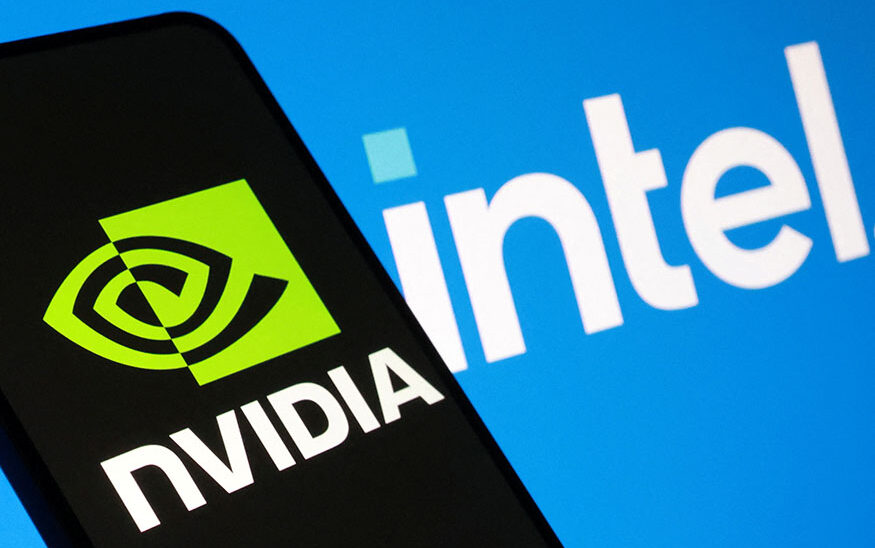
Nvidia’s $5 billion investment in Intel has become one of the most important semiconductor deals of the year. Announced in September and finalized through a private placement, the agreement brings together two American chip giants with very different strengths. At a time when artificial intelligence is driving massive demand and production costs continue to rise, this deal reflects a clear shift in how chip companies plan for the future.
Rather than competing on every level, Nvidia and Intel are choosing cooperation to support long-term stability in the industry.
Key Details of the Nvidia and Intel Agreement
Under the terms of the deal, Nvidia agreed to buy Intel shares at a fixed price of $23.28 per share. In total, Nvidia purchased more than 214 million Intel shares, making the investment worth around $5 billion. The shares were sold through a private placement, allowing the transaction to be completed smoothly without disturbing the open market.
The investment was reviewed and approved by U.S. antitrust authorities earlier this month, clearing the way for final completion.
Why This Deal Matters for Intel
Intel has been under pressure after years of heavy spending on new manufacturing facilities and technology upgrades. While these investments were meant to secure long-term growth, they reduced short-term financial flexibility and raised concerns among investors.
Nvidia’s investment provides Intel with strong financial support and renewed confidence. It allows Intel to continue executing its recovery strategy without cutting back on critical projects. The deal also signals that Intel still plays an important role in the future of chip manufacturing.
Nvidia’s Broader Industry Strategy

Nvidia leads the market in AI chip design and data center solutions. However, it relies on a healthy semiconductor ecosystem to maintain that leadership. By investing in Intel, Nvidia helps strengthen a key U.S.-based chipmaker without taking operational control.
This approach reduces long-term risks and shows Nvidia’s commitment to industry stability. It also reflects a growing trend where major technology companies invest in partners rather than compete in every area.
Market Reaction and Regulatory Approval
Before closing, the deal required approval from U.S. regulators. Antitrust agencies cleared the investment, confirming it would not limit competition in the semiconductor space.
After the filing, Nvidia shares showed a slight decline in premarket trading, while Intel’s stock remained mostly flat. This muted response suggests the market had already anticipated the finalization of the deal.
How the Deal Reshapes the Chip Industry
| Industry Aspect | Before the Deal | After the Deal |
|---|---|---|
| Competition | High pressure | Balanced cooperation |
| Financial Stability | Uneven | Improved support |
| Investment Trends | Independent spending | Strategic partnerships |
| AI Growth | Limited by supply | More stable outlook |
What This Means Going Forward

The Nvidia and Intel deal highlights a shift toward collaboration in the semiconductor industry. Rising costs, complex supply chains, and strong AI demand are pushing companies to rethink traditional competition models.
For readers who want deeper insight, our coverage on semiconductor market trends and AI chip developments explores how partnerships are shaping the next phase of growth.
Final Thoughts
The $5 billion investment between Nvidia and Intel is more than a financial transaction. It represents a change in how chip companies work together to face industry challenges. As AI continues to reshape technology, deals like this may become more common, setting a new direction for the global semiconductor market.