Meta Description
Discover how mission control guides the Artemis II Moon mission from Earth to space, ensuring safety, precision, and success at every stage.
Space missions may look like they are all about rockets and astronauts, but the real guidance comes from Earth. For the upcoming Artemis II, mission control will act as the central system that keeps everything moving in the right direction.
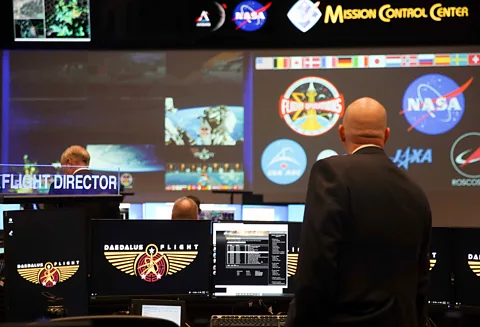
At the heart of this operation is the Christopher C. Kraft Jr. Mission Control Center in Texas. This is where engineers, analysts, and flight directors work together to monitor and guide the mission every second.
The Evolution of Mission Control
Mission control has its roots in the Apollo Program. Back then, teams relied on basic computers and limited data. Today, the system is far more advanced, but the core idea remains the same—bring experts together to manage the mission.
| Aspect | Apollo Era | Artemis Era |
|---|---|---|
| Systems | Manual and basic | Automated and advanced |
| Data Monitoring | Limited | Real-time and detailed |
| Team Setup | Smaller teams | Larger and specialized teams |
| Work Style | Strict and formal | Flexible and collaborative |
This evolution has made missions safer and more efficient.
Guiding Artemis II Step by Step
The Orion spacecraft will carry astronauts on a journey around the Moon and back. Mission control will guide each stage of the mission carefully.
From launch, teams monitor speed, trajectory, and system health. They also keep track of the astronauts’ condition. Every piece of data is checked to make sure the mission is on the right path.
The flight director leads the process and makes key decisions. Communication with the crew is handled through a single channel to avoid confusion and ensure clarity.
The People Behind the Mission
Mission control is not just one room filled with screens. It includes several teams working together. One of the most important groups is the Mission Evaluation Room (MER).
These engineers understand every part of the spacecraft because they helped build it. Their job is to study problems in detail and suggest solutions. This teamwork allows mission control to respond quickly and effectively.
Lessons from missions like Apollo 13 still influence how teams prepare today. Every possible issue is tested in simulations before the actual mission.
A Critical Moment in Space
One of the most important decisions in Artemis II comes after the spacecraft completes its orbit around Earth. Mission control must decide if all systems are ready for the journey to the Moon.
This step is crucial because once the spacecraft moves forward, returning quickly is not easy. The decision is made only after careful review of all systems.
Facing Risks with Preparation
Space travel always involves risks. During re-entry, the spacecraft will face extreme heat and speed. Even a small problem can turn serious if not handled properly.
Events like the Space Shuttle Columbia disaster have shown the importance of careful planning. These lessons have improved safety in modern missions.
Mission control teams train for months using simulations where multiple failures happen at once. This helps them stay ready for real challenges.
Why Mission Control Is Essential
Even with advanced technology, human judgment remains key. Mission control connects every part of the mission and ensures everything works together smoothly.
It is the guiding force that keeps the spacecraft on track and the astronauts safe. Without it, missions like Artemis II would not be possible.
Conclusion
As Artemis II prepares to take humans closer to the Moon once again, mission control will be at the center of the journey. From Earth to space and back, every step depends on the people behind the screens.
They may not always be visible, but their role is vital. Mission control truly guides the path from Earth to the Moon.