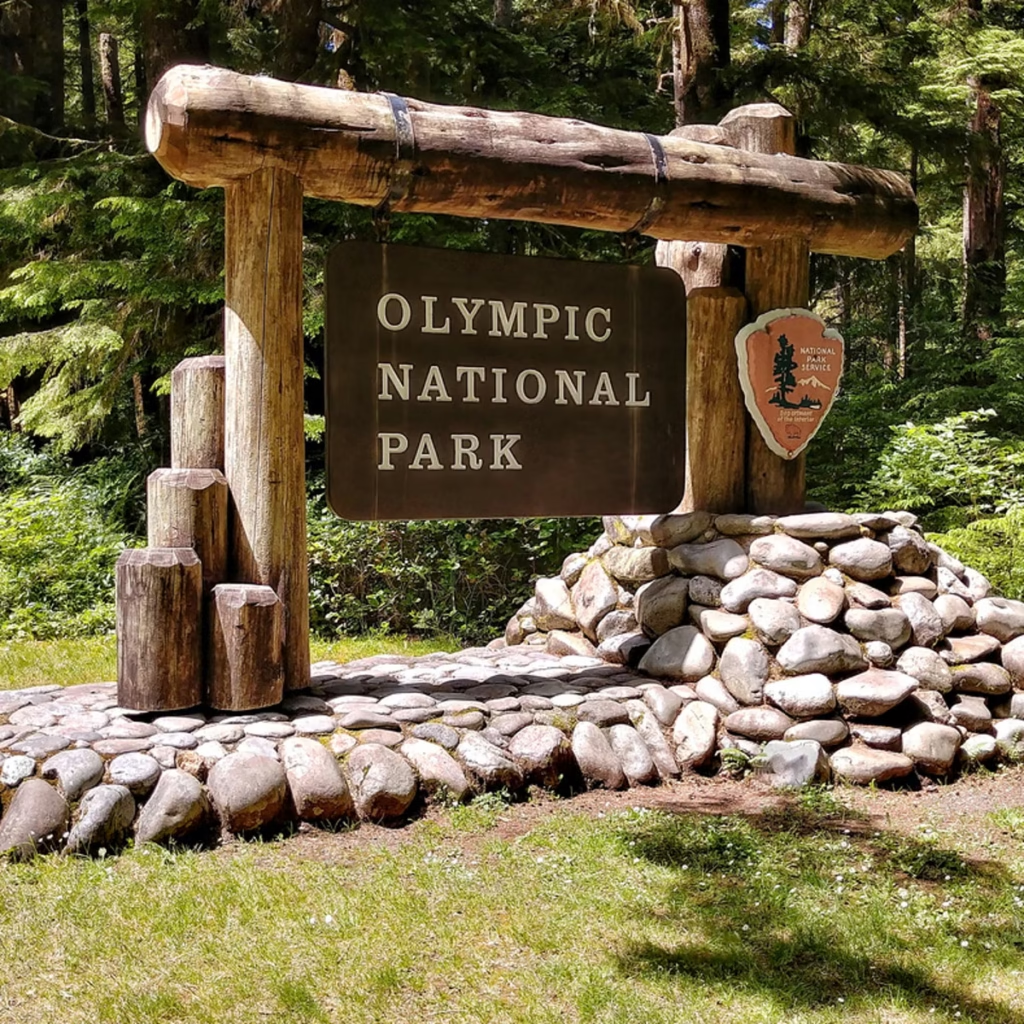
A cold case that remained unsolved for more than two decades has finally reached a breakthrough. After 26 years, investigators have identified a body found in a sleeping bag at a national park, bringing answers to a family that had lived with uncertainty for years.
The case began when human remains were discovered inside a tent in a remote area of a national park. Despite several attempts to determine the victim’s identity, investigators were unable to find enough evidence to solve the mystery. Today, thanks to modern forensic technology, the story has finally taken a significant turn.
Discovery of the Body Found in a Sleeping Bag
The remains were discovered in July 2000 by a researcher exploring a remote section of the park. The body was found inside a sleeping bag within a tent, far from populated areas.
Authorities immediately launched an investigation. A pathologist examined the remains and estimated that the individual had been deceased for months, possibly even years, before being found.
Investigators collected personal items and other evidence from the campsite. However, the available technology at the time was not enough to identify the individual. Fingerprint analysis failed to provide useful results, and the case remained open with few leads.
How Modern DNA Testing Solved the Mystery
Years later, advancements in forensic science offered investigators a new opportunity. A DNA sample from the remains was submitted for advanced testing and forensic genealogy analysis.
The results helped investigators identify possible family connections. Authorities then worked with relatives across different states to compare DNA samples and confirm the individual’s identity.
This process eventually solved a mystery that had remained unanswered for more than 26 years. For family members, the identification brought long-awaited closure and ended decades of uncertainty.
Investigation Methods: Then and Now
| Investigation Area | Earlier Methods | Modern DNA Technology |
|---|---|---|
| Identification Process | Fingerprints and physical records | DNA testing and genealogy |
| Family Connections | Difficult to establish | Easier through genetic matching |
| Available Leads | Very limited | Expanded through databases |
| Chance of Resolution | Low in cold cases | Much higher today |
Why This Case Is Important
The identification of a body found in a sleeping bag at a national park highlights the growing role of forensic genealogy in solving cold cases. Investigators now have tools that were unavailable when many older cases were first opened.
This breakthrough also demonstrates the importance of preserving evidence. Even after decades, evidence collected at a crime scene can help provide answers when examined with newer technology.
For families of missing persons, stories like this offer hope that unresolved cases can still be solved, regardless of how much time has passed.
A Long-Awaited Answer
The successful identification marks the end of a 26-year mystery that once seemed impossible to solve. While many questions surrounding the circumstances may remain, investigators have accomplished an important goal by restoring the victim’s identity.
The case serves as a reminder that cold cases are never truly forgotten. Through persistence, careful investigation, and advances in DNA science, answers can still emerge years later. For one family, the identification of their loved one finally provides the closure they have been seeking for decades.